United States (USD)
 United Kingdom (GBP)
 Canada (CAD)
 Australia (AUD)
 Singapore (SGD)
 New Zealand (NZD)
 India (INR)




Product Details
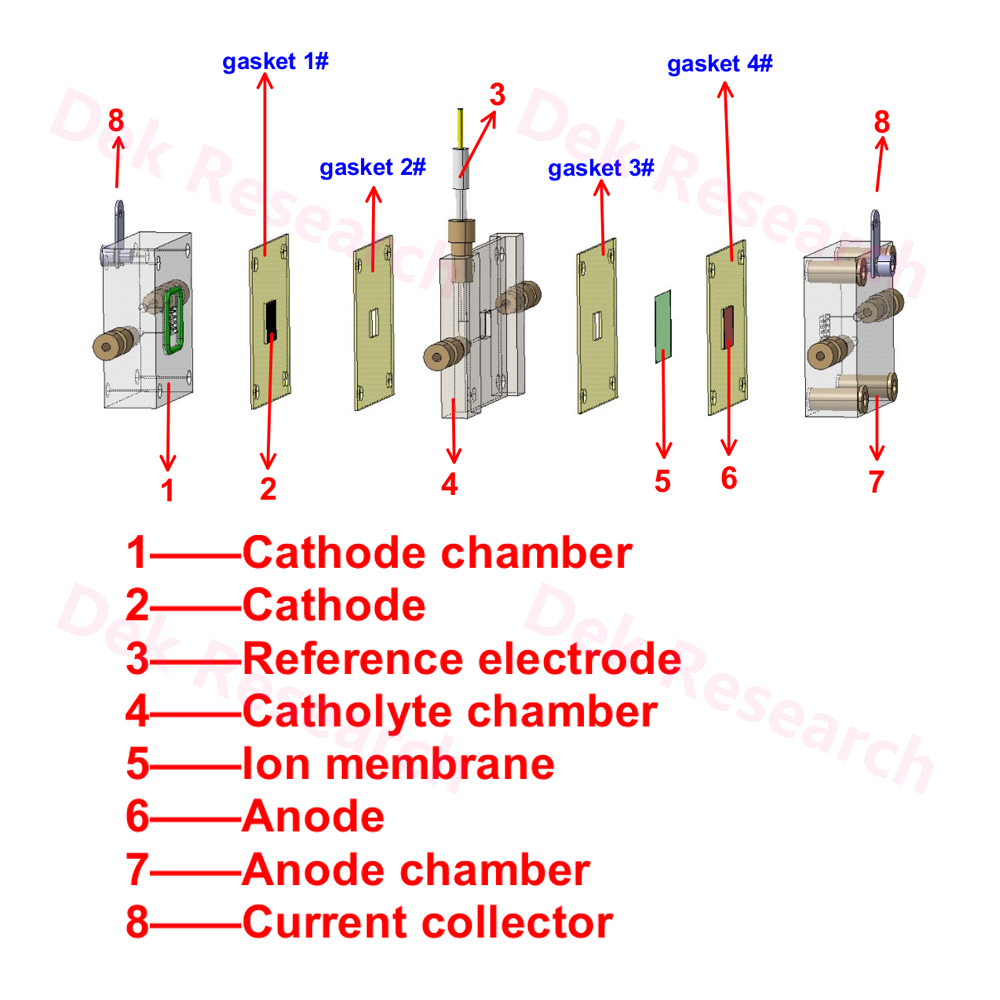
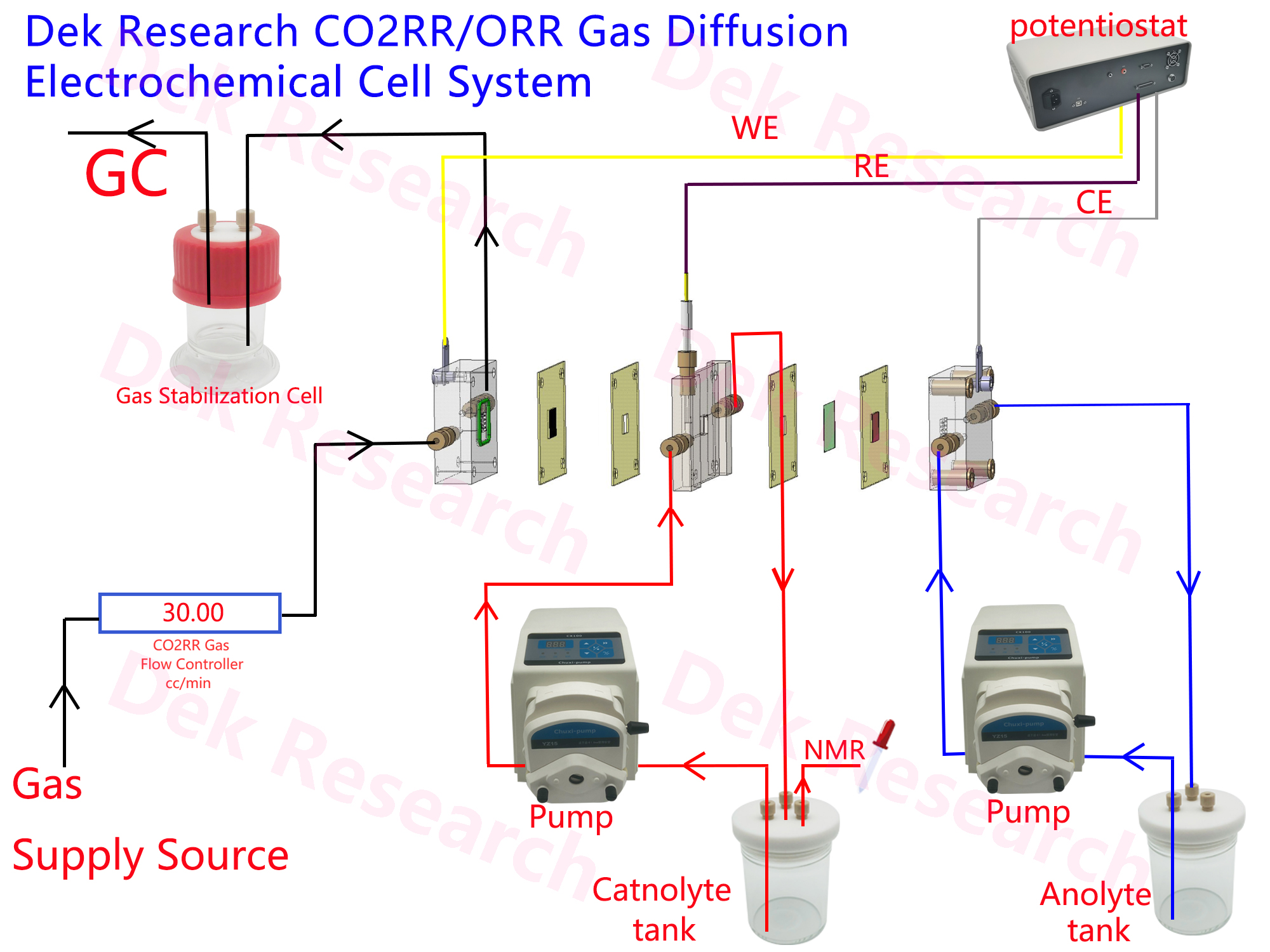
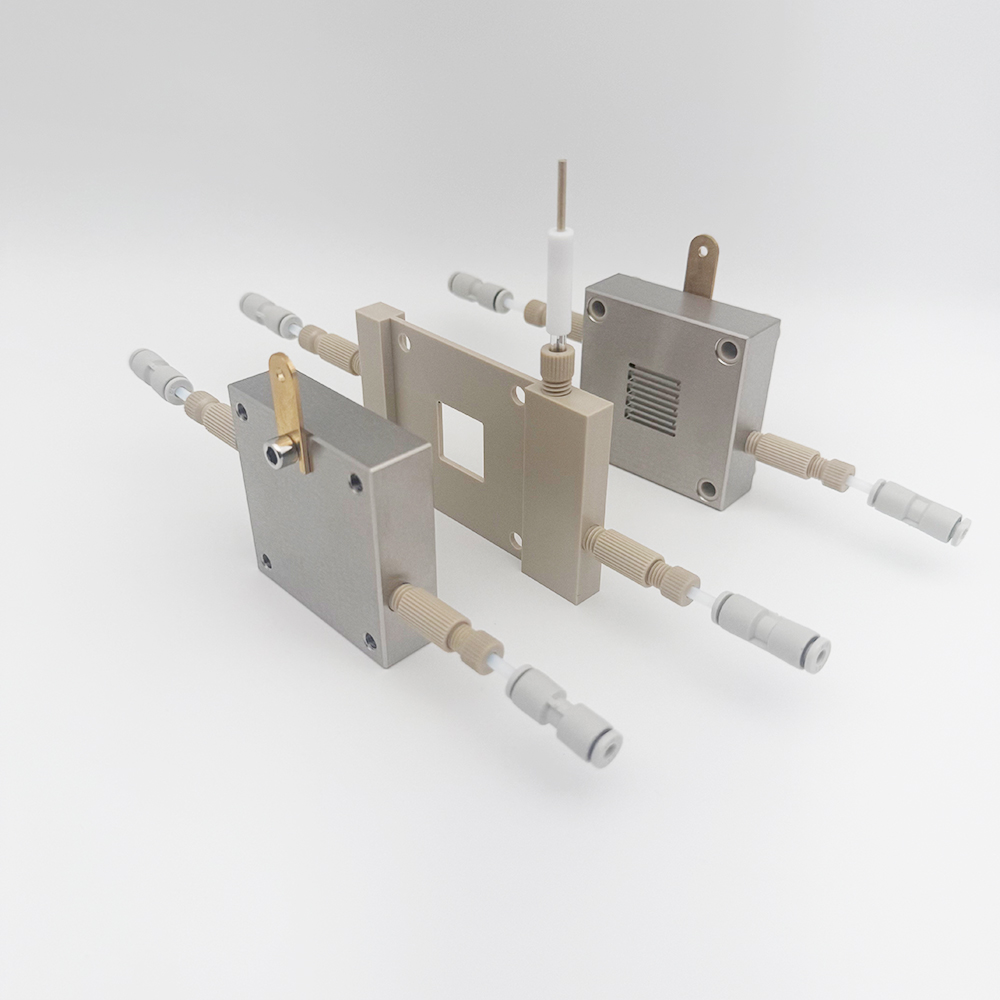
In the ongoing development of electrocatalytic carbon dioxide reduction (CO2RR) technology, researchers have discovered that by using a gas diffusion electrode (GDE) with a flowing catholyte, it is possible to evaluate the electrocatalytic performance of these catalysts regardless of mass transfer limitations and local pH effects. That is, a so-called flow electrolytic cell is constructed to replace the static H-type electrolytic cell in the traditional sense.
In the flow electrolysis cell, CO2 enters the cathode of the electrolysis cell from the back of the gas diffusion layer, and reacts with H+ from the electrolyte in the cathode catalytic layer to be reduced, and the reduction product is discharged from the electrolysis cell through the gas diffusion layer.
The flow electrolysis cell can not only alleviate the mass transfer polarization caused by the low solubility of CO2 in water, but also suppress the hydrogen evolution side reaction due to the use of a flowing electrolyte, and reduce the CO2 activation energy barrier and enhance the CC coupling between *CO, thereby increasing the selectivity of the C2 product.Continuous reaction can bring the advantage of no backflow of materials, so that the product can not be over oxidated and reduced, and the product yield can be improved.
Characteristic:
1. Compared with the usual H-type electrolytic cell, the liquid flow electrolytic cell has more advantages in liquid phase mass transfer kinetics.
2. Directly supply CO2 gas to the cathode, which overcomes the disadvantages of low solubility and slow diffusion of CO2 gas in aqueous solution.
3.The thickness of the electrode plate can be customized according to the needs, which can effectively shorten the distance between the anode and the anode, reduce the resistance, and improve the test efficiency.
Parameter:
1.The electrode plate can be used as an end plate, a channel plate and a current collector, which can be quickly assembled and disassembled, and is easy to clean.
2.The default plate material is titanium, and it supports customized 316L stainless steel, 904L stainless steel, nickel, platinum-plated,gold-plated etc.
3.The channel shape is serpentine S channel by default, and it supports customized parallel, cross-finger, dot matrix, multi-S channel, etc.
4.Common flow channel width and depth is 1.5mm, and it supports customized 0.5mm,1mm,2mm, etc.
5.The area includes 1cm2, 4cm2, 5cm2, 9cm2, 16cm2, 25cm2, 50cm2, 100cm2, etc.
6.The thickness of the middle cathode electrolyte chamber includes 1mm, 1.5mm, 2mm, and 3mm. The diameters of the reference electrodes include 6mm and 4mm.
7.There are two kinds of gaskets: PTFE gasket and fluorine gasket.
Specification:
cathode/anode chamber material:Ta2 titanium
cathode/anode channel shape: S-type channel
cathode/anode channel width:1.5mm
cathode/anode channel depth:1.5mm
number of channels:9
Cathode electrolyte chamber material:Polyetheretherketone(PEEK)
Distance between cathode and anode:2mm
Reference electrode diameter: 4mm
1. This is a customized item, we can't offer any refund or exchange. If you have any questions before purchasing, please feel free to communicate with us.
Product Includes:


1 * Flow cell
5 * Foam nickel 100*100*1mm
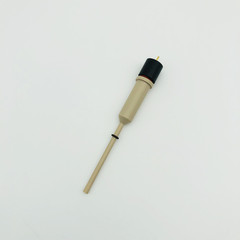
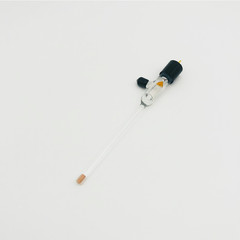
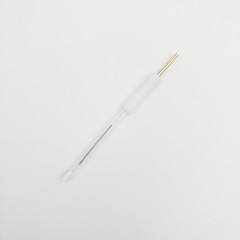
1 * Ag/AgCl reference electrode Φ4*50mm glass rod
1 * Φ3mm PTFE tube length 5meters
1 * Kapton tape
1 * Tracheal cutter
6 * PU quick connect φ3mm
4 * Positioning rod
1 * PTFE film tape
2 * L-shaped wrench
6 * Plate fixing rod M5*40mm
6 * Conductive current collector fixing rod
6 * Conductive current collector
3 * M12-6.7mm Electrode hole sealing screw and O-ring
12 * PEEK sealing screw M8/M7
12 * PEEK sealing screw M7 and O-ring
2 * Built-in sealing o-ring
1 * Sealing gaskets
[4 pieces of 25-58-0.2mm PTFE gasket
4 pieces of 25-58-0.25mm PTFE gasket
8 pieces of 25-58-0.2mm fluorine rubber gasket
8 pieces of 25-58-0.3mm fluorine rubber gasket
8 pieces of 25-58-0.8mm fluorine rubber gasket
8 pieces of 25-58-1mm fluorine rubber gasket
24 pieces of 20-58-0.2mm fluorine rubber gasket]
Literature and Reviews:
1.Angew. Chem. Int. Ed (2026); Wrapping Tin Sulfide Nanocatalysts with Graphene Oxide Nanosheets for Improved Electroreduction of Carbon Dioxide to Formic Acid; DOI:10.1002/anie.3823676
2.J. Am. Chem. Soc(2026); Electrolysynthesis of Ethylene Glycol from Methanol via Oxidative C–C Coupling; DOI:10.1021/jacs.6c03536
3.Science (2026); Bromine-mediated electrochemical propane dehydrogenation by self-assembled ionic liquid-SnO2 hollow spheres; DOI: 10.1126/science.aed2309
4.Advanced Materials(2026); Cascade C-C/C-N Bonding for Acetamide Synthesis from Electrocatalytic CO2 and Nitrate Coupling on CuCo Diatomic Sites; DOI:10.1002/adma.73077
5.Nature Synthesis(2026); High-efficiency organo-electrocatalysts enable both anodic and cathodic reactions; DOI:10.1038/s44160-026-01039-y
6.ACS Catal(2026); Atomically Dispersed Cu-O4 Sites: A Simplified Coordination Strategy for Efficient and Durable H₂O₂ Production; DOI: 10.1021/acscatal.6c00048
7.Nature Communications (2026); Active site design enables industrial scale H2O2 electrosynthesis with metal-free catalysts; DOI: 10.1038/s41467-026-70983-2
8.Nature Communications (2026); Synergistic surface modification of Cu with schiff-base networks for high selectivity and durability in CO2-to-C2H4 electroreduction; DOI: 10.1038/s41467-026-70595-w
9.Nature Communications (2026); Enhanced methane chlorination via RuO₂-gas convection electrode with in-situ generated dynamical three-phase boundaries; DOI: 10.1038/s41467-026-68845-y
10.Angew. Chem. Int. Ed (2026); Mesoporous Engineering of Single-Atom Catalyst for Industry-Level Electrocatalytic CO2 Reduction in Membrane Electrode Assemblies; DOI:10.1002/anie.202523859
11.J. Am. Chem. Soc(2026); Nanoparticle-Single-Atom Tandem Catalyst within a Metal–Organic Framework for Efficient Ethylene Electrosynthesis; DOI:10.1021/jacs.5c19451
12.Nature Communications(2025); Nano-confinement engineering boosts C–N coupling for urea electrosynthesis; DOI:10.1038/s41467-025-67741-1
13.Angew. Chem. Int. Ed (2025); Tuning Local Proton Concentration and OOH Intermediate Generation for Efficient Acidic H₂O₂ Electrosynthesis at Ampere-Level Current Density; DOI:10.1002/anie.202503626
14.Angew. Chem. Int. Ed (2025); Lattice Hydrogen Participation and Mass Transport Acceleration Improve CO2 Electroreduction to C2 Products; DOI:10.1002/anie.202518519
15.Joule(2025); Neighboring nonmetal site as an intermediate modulator switching CO₂ electroreduction pathway toward multicarbons; DOI:10.1016/j.joule.2025.101926
16.ACS Catal(2025); Proton-Shielding Interface Engineering for Efficient Acid H2O2Electrosynthesis; DOI:10.1021/acscatal.5c0573418177.
NEED HELP? CONTACT US
Call Toll-Free +1 (800) 972-7086
Email Us:
- Shipping
- Standard Shipping: 5-7 Business days
- DHL/Fedex Express Shipping: 2-5 Business days
PAYMENT
PRODUCT SHOW
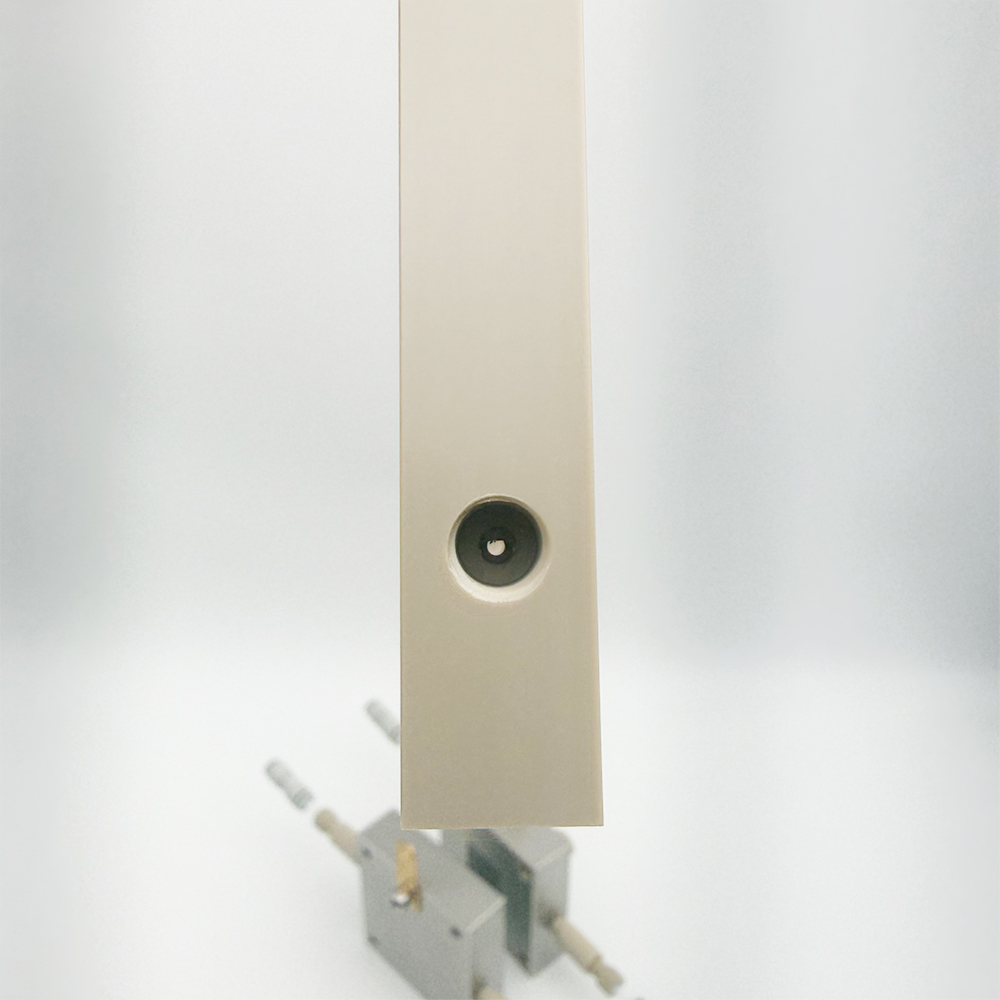
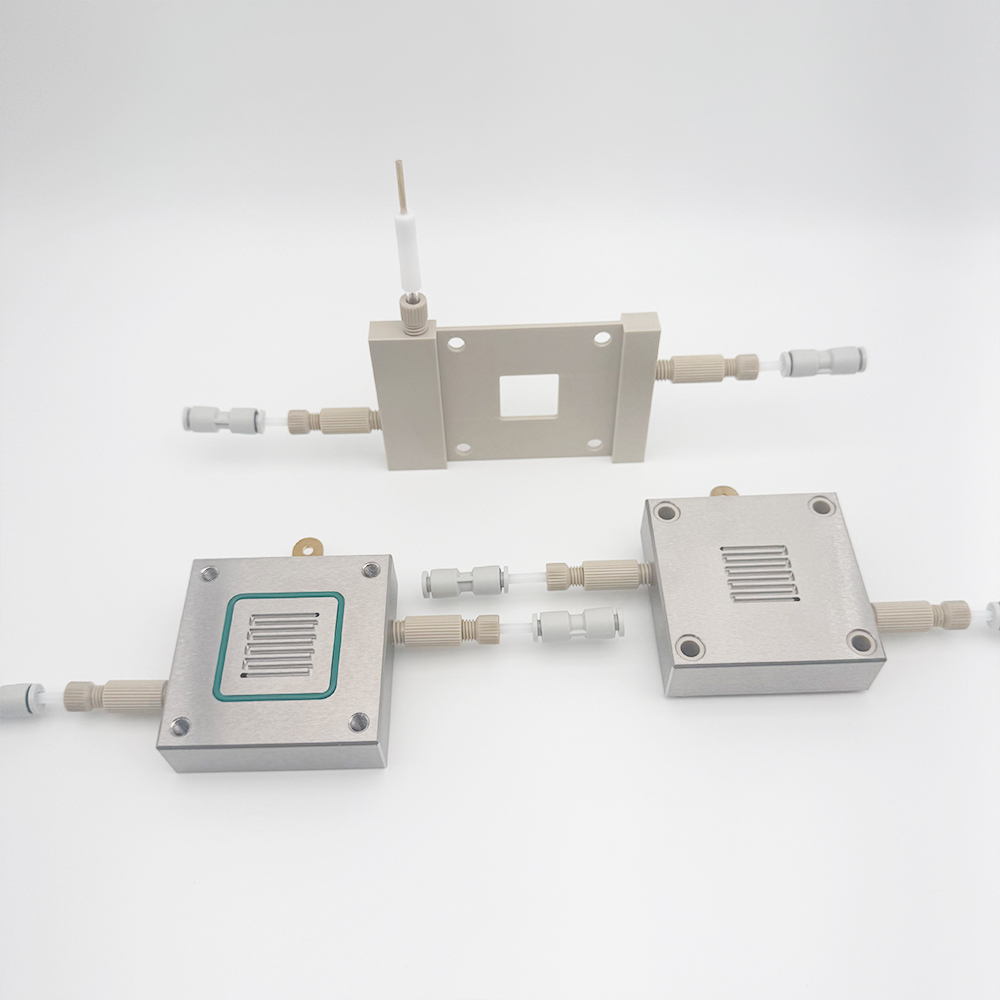
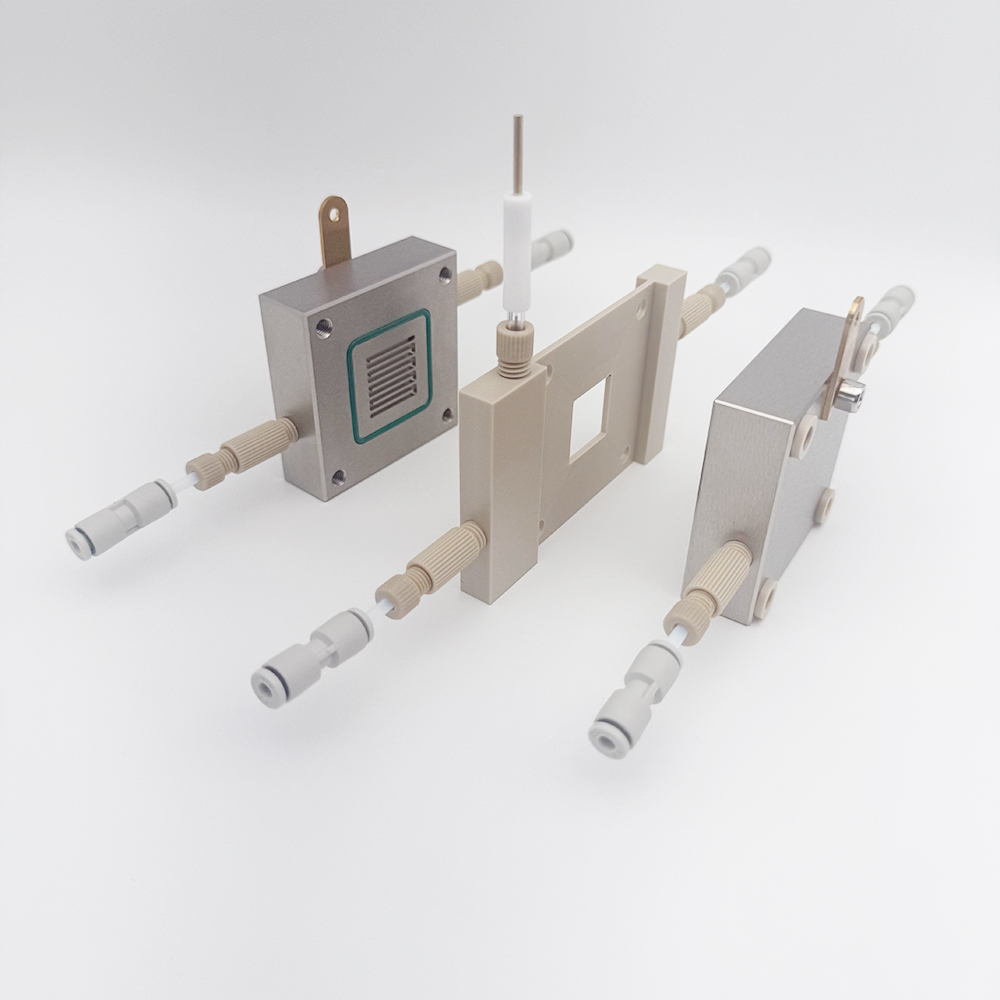
Here are some photos, you can find the details from them, if you need more information, you can talk with us, we have many experts in dekresearch, and we are very happy to give you some support in your items!
We devotes itself to providing laboratory instrumentation that enables simultaneous in-situ measurements of a number of signals (electrochemical, optical, thermal and other) on thin film and membrane materials. we have already gained so much experience in the field of electrochemical trading and our final goal is to offer our customers various kinds of laboratory instrumentation and at best price. We are gradually becoming one of the top instrumentation online shop throughout the world and we do hope we could make you outstanding by providing the real good stuff you want. Enjoy your shopping with us and have a nice day.

| Destinations | Delivery Option | Cost* | FREE SHIPPING | Total Time |
|---|---|---|---|---|
 US |
Standard Shipping | $19.95 | on order $159+ | 5-7 Business Days |
| Express | $24.95 | on order $249+ | 2-5 Businesss Days | |
 UK |
Standard Shipping | £19.95 | on order £159+ | 5-7 Businesss Days |
| Express | £24.95 | on order £249+ | 2-5 Businesss Days | |
 CA |
Standard Shipping | CA$19.95 | on order CA$159+ | 5-7 Businesss Days |
| Express | CA$24.95 | on order CA$249+ | 2-5 Businesss Days | |
 AU |
Standard Shipping | AU$19.95 | on Order AU$159+ | 5-7 Businesss Days |
| Express | AU$24.95 | on Order AU$249+ | 2-5 Businesss Days | |
 DE |
Standard Shipping | $19.95 | on order $159+ | 5-7 Business Days |
| Express | $24.95 | on order $249+ | 2-5 Businesss Days | |
 FR |
Standard Shipping | $19.95 | on order $159+ | 5-7 Business Days |
| Express | $24.95 | on order $249+ | 2-5 Businesss Days | |
 RU |
Standard Shipping | $19.95 | on order $159+ | 5-7 Business Days |
| Express | $24.95 | on order $249+ | 2-5 Businesss Days | |
 MY |
Standard Shipping | $19.95 | on order $159+ | 5-7 Business Days |
| Express | $24.95 | on order $249+ | 2-5 Businesss Days | |
 SG |
Standard Shipping | $19.95 | on order $159+ | 5-7 Business Days |
| Express | $24.95 | on order $249+ | 2-5 Businesss Days | |
 PH |
Standard Shipping | $19.95 | on order $159+ | 5-7 Business Days |
| Express | $24.95 | on order $249+ | 2-5 Businesss Days | |
 NZ |
Standard Shipping | $19.95 | on order $159+ | 5-7 Business Days |
| Express | $24.95 | on order $249+ | 2-5 Businesss Days | |
 JP |
Standard Shipping | $19.95 | on order $159+ | 5-7 Business Days |
| Express | $24.95 | on order $249+ | 2-5 Businesss Days | |
 BR |
Standard Shipping | $19.95 | on order $159+ | 5-7 Business Days |
| Express | $24.95 | on order $249+ | 2-5 Businesss Days | |
 VN |
Standard Shipping | $19.95 | on order $159+ | 5-7 Business Days |
| Express | $24.95 | on order $249+ | 2-5 Businesss Days |